Why modern labs are moving beyond mechanical sensors
Vector Extensometer vs. Clip-On Extensometer
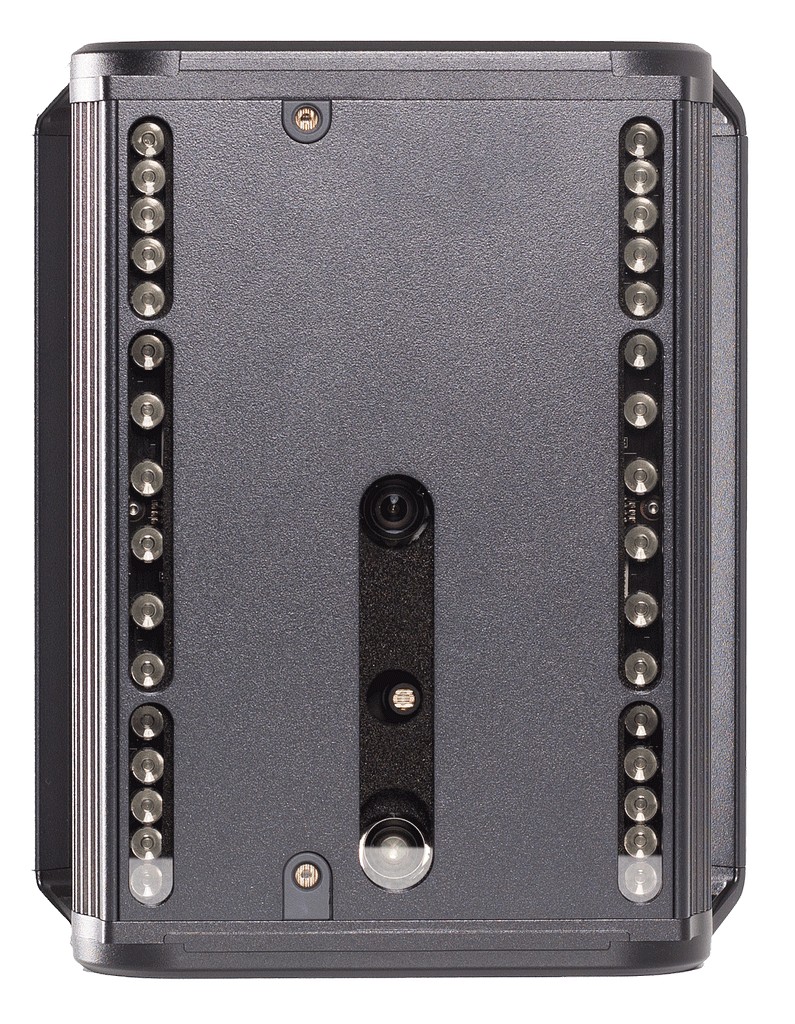
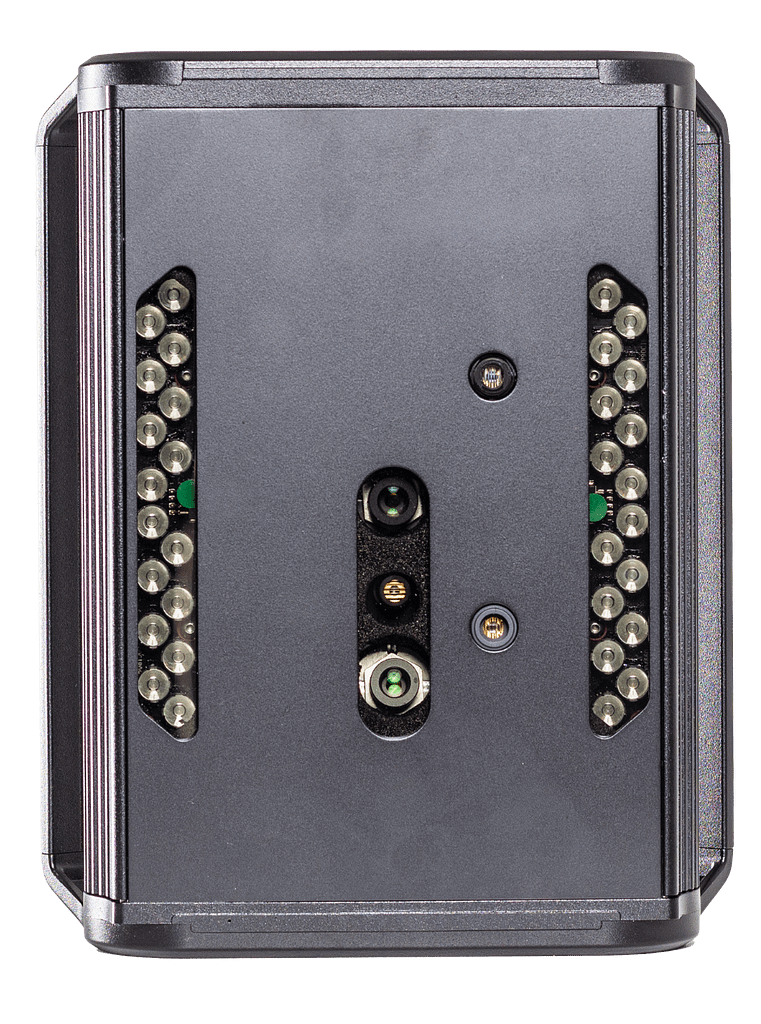
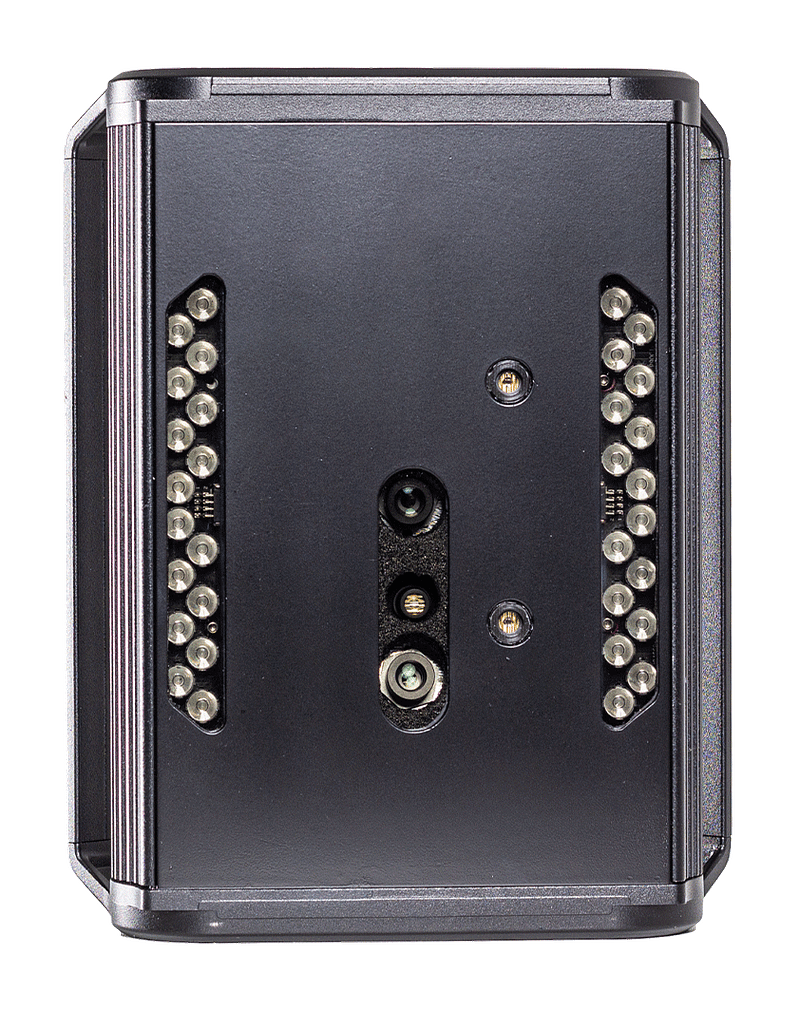
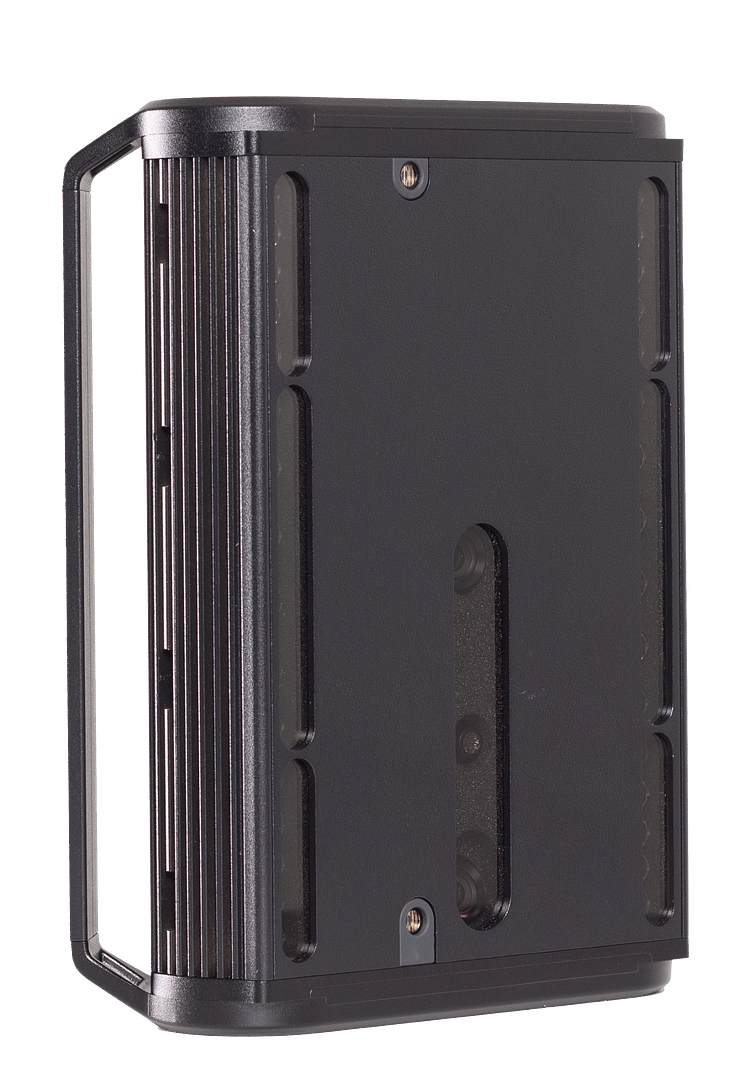
What is the Vector non-contact extensometer?
Imetrum’s Vector is a high-precision optical extensometer that utilises advanced point-tracking technology (Digital Image Correlation), stereoscopic optics and embedded computing, to measure strain and displacement without physical contact. By utilising a non-contact approach, it eliminates the mechanical variables that plague traditional contacting sensors, allowing for testing to failure and total data integrity.
The limitations of traditional clip-on extensometers
A clip-on extensometer is a traditional mechanical sensor that physically attaches to a specimen. Measuring strain through internal transducers that detect the movement of its mechanical arms as the specimen stretches. While it has been a long-standing method for basic tensile testing, its reliance on physical contact introduces inherent risks.
Vector Extensometer
Clip-On Extensometer
Accuracy: Optical precision vs. mechanical slippage
The Vector Extensometer range delivers Class 0.5 (ISO 9513) and Class B-1 (ASTM E83) accuracy across the entire test duration.
- The problem with clip-ons: Mechanical sensors rely on physical attachment, that can slide on the specimens surface, causing inaccurate data. On delicate materials, the weight of the device can cause specimen sagging, leading to unverifiable inaccuracies.
- The Vector advantage: Because it is non-contact, there is zero risk of knife-edge slip. Vector identifies the true gauge length to four decimal places at the start of every test, ensuring the data reflects the material’s true performance, not a reaction to the sensor.
By loading the video, you agree to Vimeo's privacy policy.
Learn more
Reliability: How well can you trust your data?
When using a traditional clip-on, the validity of your data is based on a series of critical assumptions. For the results to be trusted, a lab must ensure:
- The sensor hasn’t been dropped, over-extended or physically compromised since its last calibration
- The internal flexures have been maintained and are operating within their limits
- The technician has the specific ‘feel’ required to attach the device with the correct tension, a variable that changes with every specimen type.
Versatility: One solution for every specimen
The Vector Range redefines laboratory efficiency by replacing an entire inventory of fragile clip-on extensometers with a single, non-contact solution. While traditional testing requires constant hardware swaps to accommodate different specimen sizes, Vector’s multi-gauge functionality adapts instantly, whether your test requires a 25 mm or 180 mm gauge length.
Due to its non-contact nature, Vector allows for the high-accuracy measurement of fragile specimens, such as thin films or delicate composites, that would otherwise be compromised by the weight and clamping force of a clip-on device. With Vector, difficult specimens become routine.
More importantly, it solves the energy release risk: where mechanical sensors must be removed during a test to avoid being snapped by the whiplash of a specimen fracture, Vector stays safe at a distance. You get a complete, high-accuracy material profile all the way through failure, with zero risk of hardware damage or costly laboratory downtime.
By loading the video, you agree to Vimeo's privacy policy.
Learn more
Total Cost of Ownership: The ROI of non-contact testing
While the initial investment for a Vector system may be higher than a single entry-level clip-on, the Total Cost of Ownership tells a different story. Vector is an investment in laboratory uptime and hardware consolidation, rather than a recurring expense.
The Vector ROI Model
The Return on Investment (ROI) for Vector is primarily driven by the elimination of equipment breakages and the consolidation of multiple tools into one. In a typical high-volume lab, Vector achieves a positive ROI before its first annual verification.
- Equipment consolidation: A single Vector system can replace five or six different clip-on extensometers of varying gauge lengths. Instead of managing a massive inventory of fragile hardware, one unit covers your entire test suite.
- Elimination of repair costs: Traditional extensometers are plagued by broken arms and bent knife edge. Because Vector never touches the specimen, these common repair costs are reduced to zero.
- Maximum laboratory throughput: Vector removes the bottleneck of manual setup and the need for recalibration after a specimen failure. By streamlining the workflow, you significantly increase the number of tests your lab can perform per day.
Calibration costs: Unlike traditional clip-on extensometers, which require annual calibration for each device in a testing suite, plus additional recalibration if damaged during testing, Vector only requires a single annual calibration thanks to its multi-gauge length functionality, significantly reducing ongoing calibration and replacement costs.
Why Vector leads the non-contact market
While Vector is often compared to traditional clip-on extensometers, there are also other non-contact optical systems on the market positioned as clip-on replacements. These systems typically use 2D telecentric lenses and require extensive pre-calibration and careful specimen marking.
Vector moves beyond these limitations with a superior 3D stereoscopic approach. Vector remains completely indifferent to specimen movement or rotation, ensuring true strain measurement even in dynamic conditions.
- Pre-calibrated precision: Unlike competitors that require complex in-field calibration for every setup, Vector arrives factory pre-calibrated. It is a true plug-and-play system that maintains its accuracy without constant user intervention.
- Marking made simple: We’ve eliminated the need for specialised marking kits. Vector’s adaptive AI is significantly more tolerant, tracking standard markings and varied specimen surfaces with ease.
- The intelligent dashboard: With an inbuilt troubleshooting dashboard, the system provides live feedback on tracking quality and setup alignment, identifying potential issues before the test begins.
Looking for a dedicated video extensometer? While our Vector system handles strain measurement entirely onboard rather than outputting live video, we still have you covered. For application requirements that demand live video, explore the UVX3D Video Extensometers
Products
Vector Extensometer Range
Vector U200
Vector
Uniaxial Extensometer
Gauge length: 25 to 180 mm
Minimum specimen width: 5 mm
Operating distance: 250 to 350 mm
Vector U70
Vector
Uniaxial Extensometer
Gauge length: 10 to 50 mm
Minimum specimen width: 2 mm
Operating distance: 280 to 320 mm
Vector B80
Vector
Biaxial Extensometer
Gauge length: Axial 7.5 to 70 mm Transverse 6 to 25 mm
Minimal specimen width: Axial 1.5 mm flat 2 mm round Transverse 10 mm flat 12.5 mm round
Operating distance: 285 to 315 mm
contact
Book a Demo
For a technical demo and more information on how Vector can meet your measurement needs, please fill out the form below.