
video extensometers

UVX3D vs. Traditional 2D Video Systems: Why 3D Stereoscopic Wins


UVX3D vs. Traditional Video Extensometers: What’s the Difference?

While traditional video extensometers offered an improvement over mechanical clip-ons, first-generation 2D systems introduced their own set of technical limitations. The UVX3D solves this by moving from 2D tracking to a 3D stereoscopic approach, providing a level of data integrity that single-camera systems cannot match.

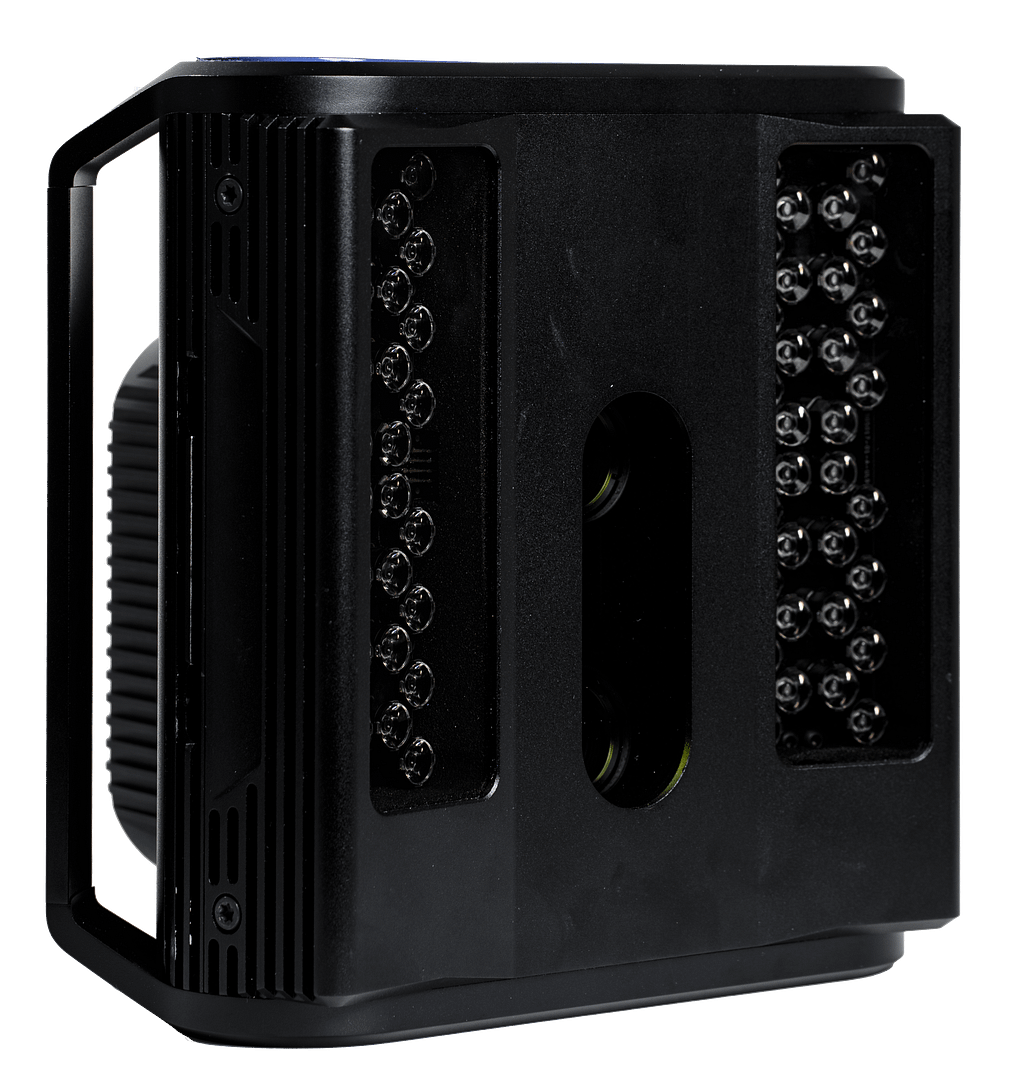
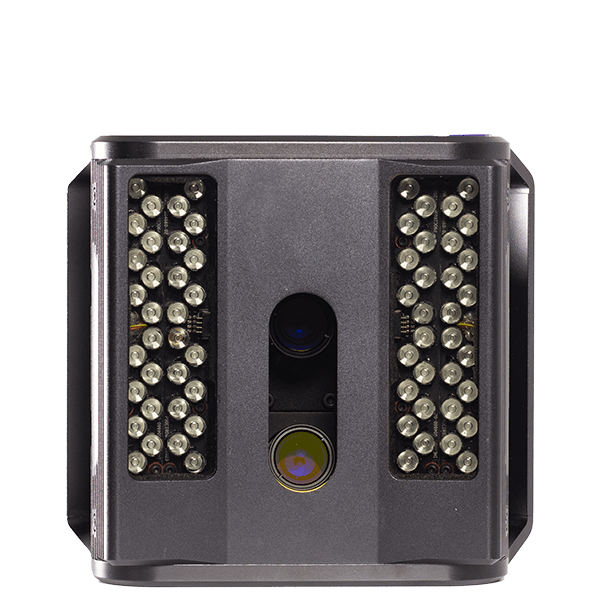
Isolated product shot of the Imetrum UVX3D 110 video extensometer module for 3D non-contact strain measurement.
UVX3D
Legacy 2D video extensometer optical setup measuring strain on a tensile test specimen.
Traditional Extensometers

The critical flaw in 2D video extensometers: Out-of-plane error

Traditional video extensometers typically use a single camera (2D) to track movement in x & y plane. While effective for perfectly flat, stationary specimens, they struggle with real-world testing environments. If a specimen moves slightly toward or away from the lens, introducing z movement, the camera perceives a change in size. This “out-of-plane” movement is incorrectly recorded as strain, leading to significant measurement errors.

  • Immunity to movement: UVX3D utilises two synchronised cameras to track the exact XYZ coordinates of the specimen. It is inherently immune to out-of-plane errors, ensuring accuracy even if the specimen rotates during a test.
  • True strain measurement: By capturing the specimen in 3D, UVX3D provides the material’s actual performance data, unaffected by the environment. 
  • Telecentric lenses: Although telecentric lenses are designed to reduce issues caused by out-of-plane movement, their effectiveness is limited. These lenses are often bulky and costly, and they can only compensate for out-of-plane movement within a very small range, typically just a few millimetres.
  • Configuration and set up: Because 2D systems must operate at a precise working distance, any change in specimen type, thickness, or positioning often requires recalibration or adjustments to the setup, resulting in increased testing time.
Vimeo

By loading the video, you agree to Vimeo's privacy policy.
Learn more

Load video

PGlmcmFtZSBjbGFzcz0iZWxlbWVudG9yLXZpZGVvLWlmcmFtZSIgYWxsb3dmdWxsc2NyZWVuIGFsbG93PSJhdXRvcGxheSIgdGl0bGU9InZpbWVvIFZpZGVvIFBsYXllciIgc3JjPSJodHRwczovL3BsYXllci52aW1lby5jb20vdmlkZW8vMTIwMDQ3NTcwND9hdXRvcGxheT0xJmFtcDtjb2xvciZhbXA7YXV0b3BhdXNlPTAmYW1wO2xvb3A9MSZhbXA7bXV0ZWQ9MSZhbXA7dGl0bGU9MSZhbXA7cG9ydHJhaXQ9MSZhbXA7YnlsaW5lPTEjdD0iPjwvaWZyYW1lPg==
Feature Legacy 2D video extensometers UVX3D (3D video extensometer)
Optical set up
User selected and configured optics. Including aperture and focus.
Requires understanding of optical configuration and compromises in selection.
Pre-configured and fixed aperture and focus.
Ensuring reliability and repeatability.
Lighting and filtering configuration
Independently positioned and brightness setting. Impacts optical set up selected.
Requires tuning to each specimen finish.
Glare possible on shiny specimens.
Susceptible to environmental effects.
Integrated monochromatic light with cross polarisation to remove
environmental effects and glare.
Automatic software-controlled autoexposure to ensure optimal
illumination selected.
Specimen marking
Variable through the use of spray cans to create speckle pattern.
Not repeatable or consistent.
Refined and repeatable stamp speckle pattern.
No training required.
Vimeo

By loading the video, you agree to Vimeo's privacy policy.
Learn more

Load video

PGlmcmFtZSBjbGFzcz0iZWxlbWVudG9yLXZpZGVvLWlmcmFtZSIgYWxsb3dmdWxsc2NyZWVuIGFsbG93PSJhdXRvcGxheSIgdGl0bGU9InZpbWVvIFZpZGVvIFBsYXllciIgc3JjPSJodHRwczovL3BsYXllci52aW1lby5jb20vdmlkZW8vMTIwMDM5OTA4MD9hdXRvcGxheT0xJmFtcDtjb2xvciZhbXA7YXV0b3BhdXNlPTAmYW1wO2xvb3A9MSZhbXA7bXV0ZWQ9MSZhbXA7dGl0bGU9MSZhbXA7cG9ydHJhaXQ9MSZhbXA7YnlsaW5lPTEjdD0iPjwvaWZyYW1lPg==

How UVX3D eliminates operational complexity

Historically, high-end optical systems were research-grade projects that required extensive training to use. UVX3D has been designed to bring 3D Digital Image Correlation (DIC) accuracy to the everyday operator.

  • Integrated lighting: Unlike traditional systems that require complex external lighting setups and add-ons, the UVX3D features a pre-calibrated optical head with in-built lighting.
  • Indifferent to alignment: In 2D systems, the camera must be perfectly aligned to the specimen. UVX3D offers a large positioning tolerance, meaning you spend less time on alignment and more time on testing.
  • Pre-calibrated: Our UVX3D arrives factory pre-calibrated, ready to measure from power on. This allows operators to reliably perform testing without the need for time consuming and manual set up.  
  • Streamlined software: Our Video Gauge software has been structured to take users through the test set up, simplifying your workflow.

Powered by Video Gauge™

The UVX3D is powered by Video Gauge™, a software with over a decade of pedigree in Digital Image Correlation (DIC) and advanced materials testing.

  • Effortless 3D DIC: Experience the depth of 3D DIC without the traditional optical complexity or the need for specialist training.
  • Custom templates: Features an expansive selection of standard measurement tools, with the freedom to create custom templates and presets.
  • Seamless lab integration: Includes batch processing, socket communications, and analogue Input and Output for immediate connectivity to your existing laboratory set up.
Vimeo

By loading the video, you agree to Vimeo's privacy policy.
Learn more

Load video

PGlmcmFtZSBjbGFzcz0iZWxlbWVudG9yLXZpZGVvLWlmcmFtZSIgYWxsb3dmdWxsc2NyZWVuIGFsbG93PSJhdXRvcGxheSIgdGl0bGU9InZpbWVvIFZpZGVvIFBsYXllciIgc3JjPSJodHRwczovL3BsYXllci52aW1lby5jb20vdmlkZW8vMTIwMDM4ODg3Nj9hdXRvcGxheT0xJmFtcDtjb2xvciZhbXA7YXV0b3BhdXNlPTAmYW1wO2xvb3A9MSZhbXA7bXV0ZWQ9MSZhbXA7dGl0bGU9MSZhbXA7cG9ydHJhaXQ9MSZhbXA7YnlsaW5lPTEjdD0iPjwvaWZyYW1lPg==

Advanced insights: Beyond simple longitudinal strain

Traditional 2D systems are often limited to measuring strain in one direction. UVX3D unlocks a deeper level of material characterisation.

  • 3D strain mapping: While legacy systems give you a single number, UVX3D (with optional software) provides a Full-Field Strain Map, showing exactly how strain is distributed across the entire surface of complex components.
  • Dynamic LCF control: UVX3D offers ultra-low latency data rates, making it one of the few optical systems capable of controlling complex Low Cycle Fatigue (LCF) tests in real-time.
  • Digital re-testing: Because the UVX3D saves a complete digital record, you can revisit a test months later to add new virtual sensors or recalculate data without needing a new specimen.
Products

UVX3D Range

UVX3D 110
Dynamic Advanced Extensometer, Video Gauge

Gauge length: 10 to 80 mm

Minimum specimen width: Axial; 2.1 mm, Transverse; 12 mm*

Working distance: 320 to 360 mm

*Values shown are the minimum verified dimensions for Class 0.5/B-1 performance; smaller dimensions may be measured but are not verified to meet these accuracy classes.

UVX3D 220
Dynamic Advanced Extensometer, Video Gauge

Gauge length: 20 to 200 mm

Minimum specimen width: Axial; 7.5 mm Transverse; 25 mm*

Working distance: 300 to 380 mm

*Values shown are the minimum verified dimensions for Class 0.5/B-1 performance; smaller dimensions may be measured but are not verified to meet these accuracy classes.

contact

Why Upgrade to UVX3D?

If your lab requires metrology-grade precision that meets ISO 9513 Class 0.5 without the headaches of traditional optical alignment, UVX3D is the modern standard. It replaces the assumptions of 2D tracking with the certainty of 3D vision.

Search