
Vector and UVx3d
Which extensometer is right for me?
Modern material testing demands an uncompromising balance between high-speed throughput and sophisticated data. As industry standards evolve, world-class testing facilities are moving away from contact-based measurement entirely. By eliminating specimen damage, knife-edge slippage, and frequent sensor recalibration, Imetrum’s non-contact solutions provide a seamless transition to the precision of optical measurement.
At a glance, the fundamental choice between our two extensometer ranges comes down to how you need to interact with your data:
- Vector is a self-contained device. Everything is processed onboard in real-time. It delivers pure strain data directly to your system without the need for an external PC or video management.
- UVX3D is a video system powered by an external PC. It captures a live video feed, allowing you to deep-dive into advanced strain mapping and reprocess your tests long after the specimen has broken.
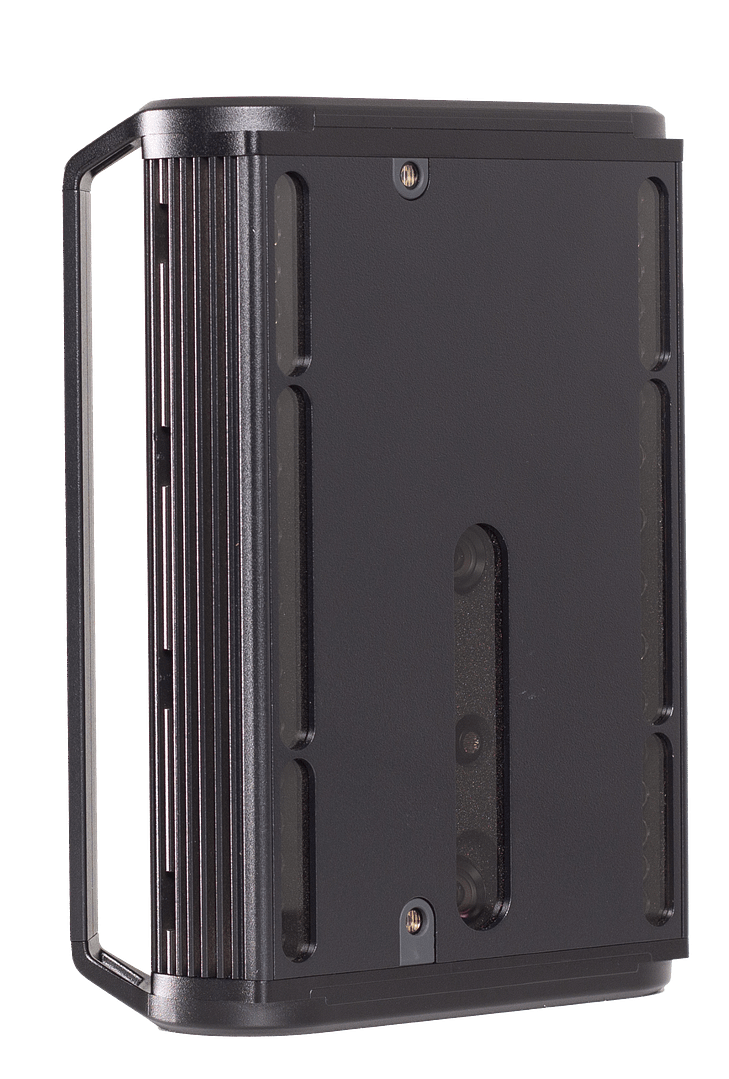
Vector Extensometer
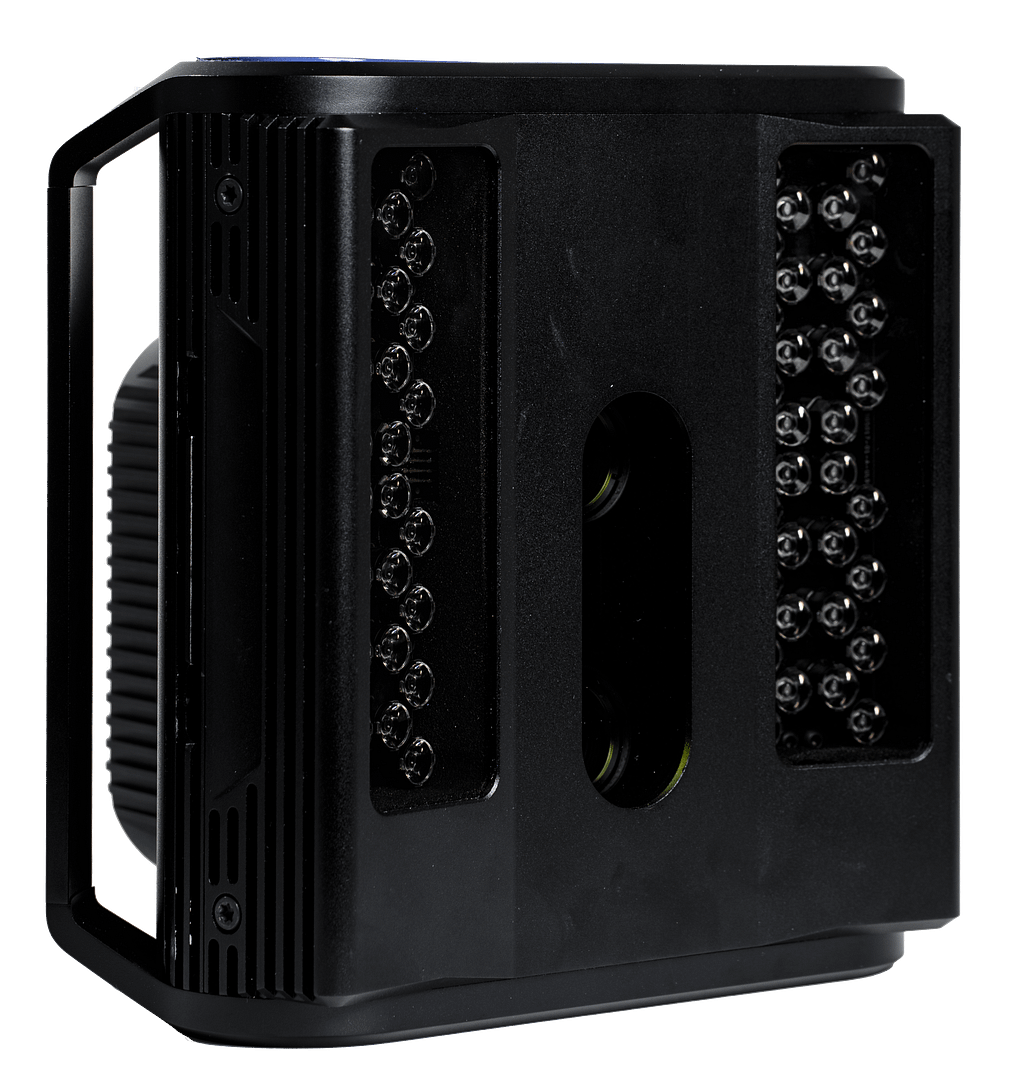
UVX3D
Vector is the ultimate clip-on replacement
Built on Imetrum’s extensive experience in Digital Image Correlation (DIC), Vector redefines how strain data is captured by delivering accurate, real-time measurements without any physical contact with the specimen.
Unlike traditional systems, Vector processes all data internally using onboard processing. There is no live video feed or external workstation required, the imaging system exists solely to support measurement. Camera data is captured and processed entirely within the device, and the output is live strain information rather than operator-facing video.
The system uses advanced pattern-tracking algorithms to monitor small regions of the specimen surface frame by frame, calculating deformation with very high precision. This enables real-time execution of DIC processing, automatic setup of measurement parameters, and direct delivery of strain data from the unit itself.

By loading the video, you agree to Vimeo's privacy policy.
Learn more
Vector delivers:
Seamless integration: Works with onboard software for a streamlined, “plug-and-play” experience.
Maximum efficiency: Optimised for high-volume QA/QC environments where speed is the priority.
Simplified workflow: No video files to manage or reprocess; just clean, reliable strain data delivered in real-time.
Reliability: Eliminates the physical risks of contact sensors, such as damage at specimen failure.
Best for: Standardised testing (Metals, Plastics, Composites) following ASTM/ISO protocols where throughput is priority.
UVX3D is the ultimate 3D advanced video extensometer
As a dedicated video extensometer system, the UVX3D pairs its high-resolution stereoscopic optics with an external computer workstation running Imetrum’s proprietary Video Gauge™ software. This configuration delivers a high-fidelity, live video output directly to the operator, providing an interactive interface where users can apply a versatile array of virtual measurement tools, including extensometers, strain gauges, rotation tools, and full-field DIC strain maps, directly onto the real-time feed.
The system utilises advanced 3D pattern-tracking algorithms to monitor small regions of the specimen surface frame by frame, calculating multi-axis deformation with extreme precision. By shifting the heavy processing to Video Gauge™ on an external PC, the UVX3D not only streams low-latency strain data (up to 500 Hz) for real-time closed-loop machine control but also generates a detailed video archive. This allows operators to easily re-process and post-process tests long after the physical specimen has failed, ensuring maximum data extraction from every test.

UVX3D delivers:
Deeper material insights: UVX3D’s advanced capabilities unlock advanced material insights with full-field strain mapping, transforming raw data into visual intelligence. With low-latency dynamic control for precise Low Cycle Fatigue (LCF) testing, you can capture highly accurate measurements and uncover hidden material behaviours throughout the testing process.
Optimised workflow: Software presets and templates streamline the testing process and significantly reduce operator error.
Digital re-testing: Because the UVX3D saves a complete digital record, you can revisit a test months later to add new virtual sensors or recalculate data without needing a new specimen.
Seamless integration: Highly adjustable mounting kit compatible with the vast majority of Universal Testing Machines (UTMs).
Best for: Advanced R&D and dynamic research, UVX3D is the ultimate choice for single-specimen tests where failure isn’t an option, capturing video that allows you to digitally reprocess the data afterward.
The Imetrum Standard: Shared Advantages
While they serve different lab environments, both the Vector and UVX3D ranges are built on Imetrum’s core optical expertise. Whichever system you choose, you benefit from:
- Strain rate-controlled testing: To perform true strain rate control, you need ultra-low, consistent latency. Both systems deliver the high-frequency, low-latency output required to control testing machines in real-time, easily meeting strict ASTM E8 and ISO 6892 strain rate control requirements for highly sensitive materials like rigid metals and plastics.
- Uncompromising accuracy: Fully compliant with international standards, achieving ASTM E83 Class 0.5 and ISO 9513 Class B-1 accuracy.
- Optical pre-calibration: Both systems come factory pre-calibrated and ready to measure from power-on. This eliminates time-consuming optical setups and manual calibrations. If you need to move the extensometer, you can do so without worrying about recalibration.
- Seamless lab integration: Featuring an identical, highly adjustable mounting kit, both systems are compatible with the vast majority of Universal Testing Machines (UTMs). A lab can seamlessly swap between a Vector and a UVX3D in minutes.
- Defeating laboratory glare: Both systems utilise integrated lighting. Equipped with blue light filters, they are entirely immune to ambient room lighting. Furthermore, cross-polarisation technology completely isolates the light we want, eliminating glare and reflections while allowing essential surface details (like pen marks and inks) to shine through cleanly.
| Feature | Vector (clip-on replacement) | UVX3D (video extensometer) |
|---|---|---|
|
Primary uses |
Routine Quality Assurance / Quality Control.
High-volume testing |
Advanced Research and Development testing
Dynamic research |
|
Hardware |
Single module: combined optics and computation.
Pre-assembled and pre-calibrated Fixed optics and integrated lighting Integrated signal output |
Separate optics to control PC
Pre-assembled and pre-calibrated Fixed optics and integrated lighting Optional analogue signal output |
|
Software |
Lightweight remote control app with integrated support |
Powerful and comprehensive software for camera control, test set up, live testing, review and post-processing. |
|
Architecture |
Stereoscopic camera system: 3D field of view
Industry-leading tracking algorithms |
Stereoscopic camera system: 3D field of view
Industry-leading tracking algorithms |
|
Set up style |
Simple and automatic: ‘plug-and-play’ |
Intuitive 3D out of the box |
|
Operation style |
Automatic measurement of presented markings |
Complete user control of specimen appearance, measurements and test Start-Stop |
|
Calibration method |
Quicker and easier than a set of clip-ons by marking the calibration standard |
Quicker and easier than traditional optical system by positioning the calibration standard within the 3D field of view |
|
Key advantages |
Significant improvement in testing throughput Range of high class gauge lengths in one device Eliminates physical contact effecting the results Automatic monitors prevent the likelihood of poor data |
Deep insights through 3D DIC technology Freedom to measure with utter simplicity Eliminates physical contact effecting the results Test archives for valuable re-processing. |
contact
Book a Demo
For a technical demo and more information on how our products can meet your measurement needs, please fill out the form below.

 powered by Borlabs Cookie