
Non-contact extensometers
The Vector Extensometer Range
Vector is a self-contained full 3D strain measurement system that uses stereoscopic optics, Digital Image Correlation (DIC), and embedded computing to deliver fast, accurate, live measurements without the complexity traditionally associated with DIC systems.
Building on our years of expertise, we have simplified the way strain measurement can be captured. Unlike conventional DIC systems, Vector is designed purely as a measurement device, closer in use and workflow to a clip-on extensometer than a traditional camera-based imaging system.
At its core, Vector utilises DIC algorithms, an advanced computer vision technique engineered for material testing. While traditional camera systems are limited to two-dimensional movement, Vector uses a two-camera stereoscopic set up to reconstruct depth information and calculate true, three-dimensional deformation.
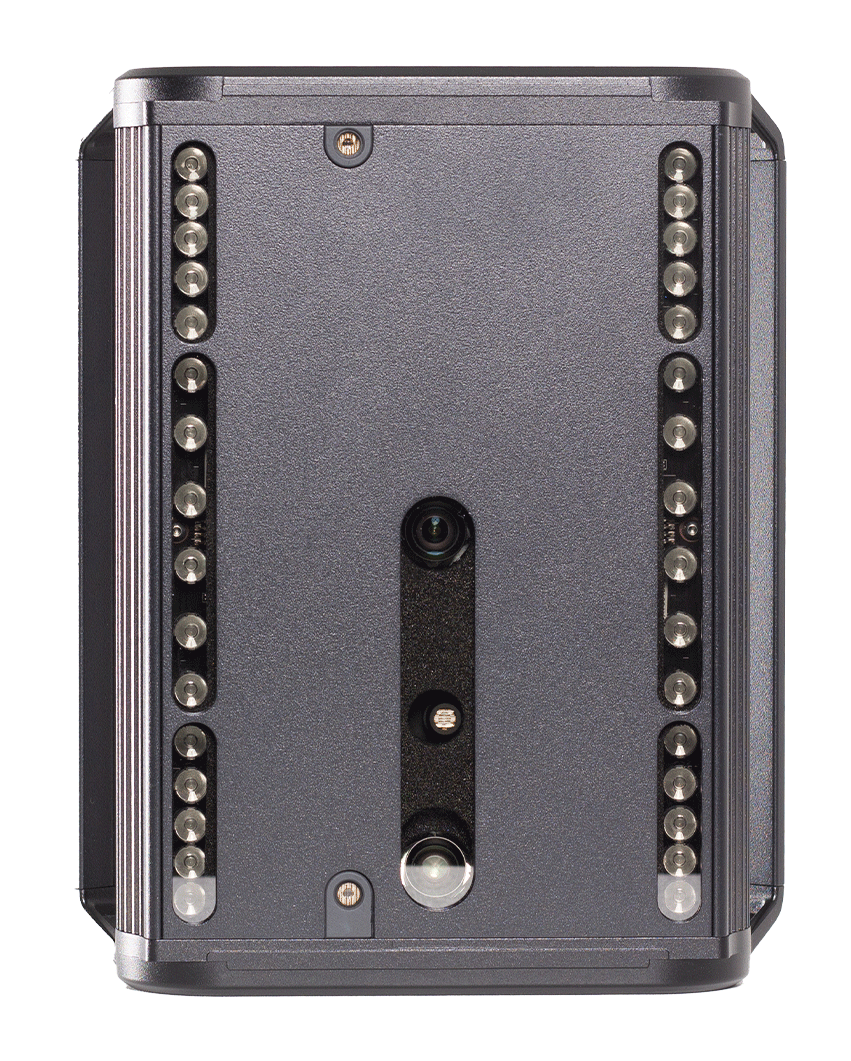
U200, Uniaxial extensometer
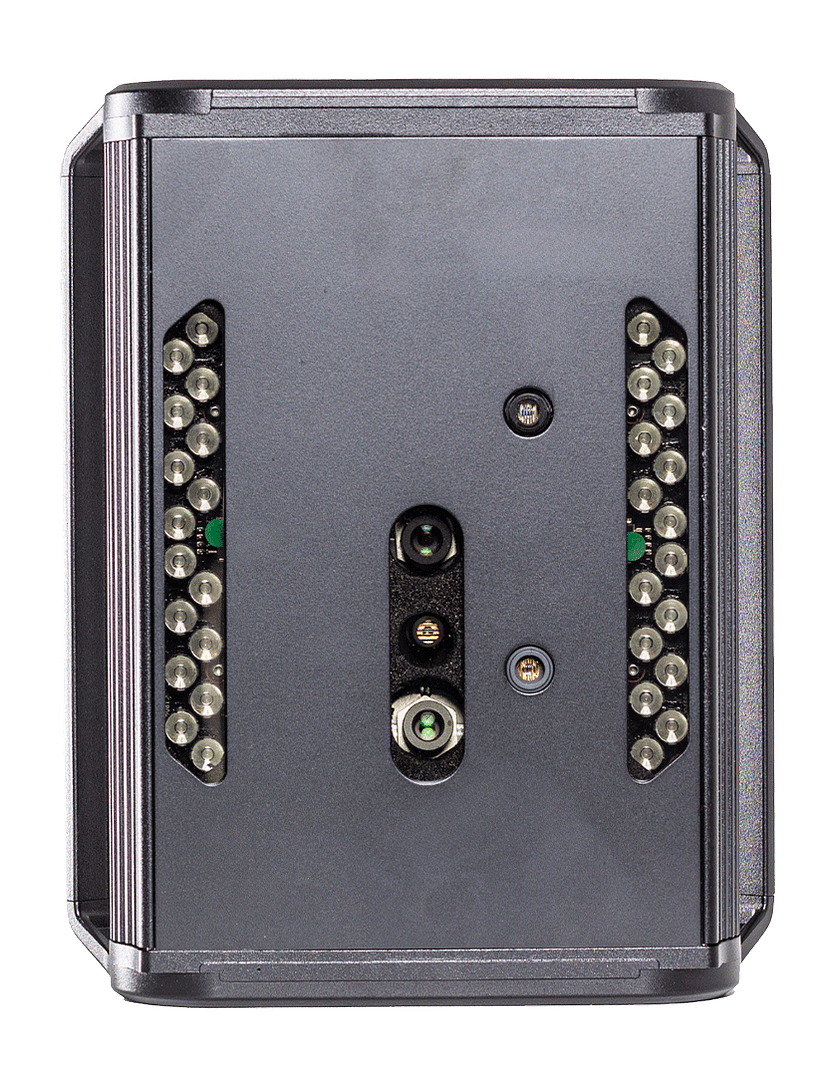
U70, Uniaxial extensometer
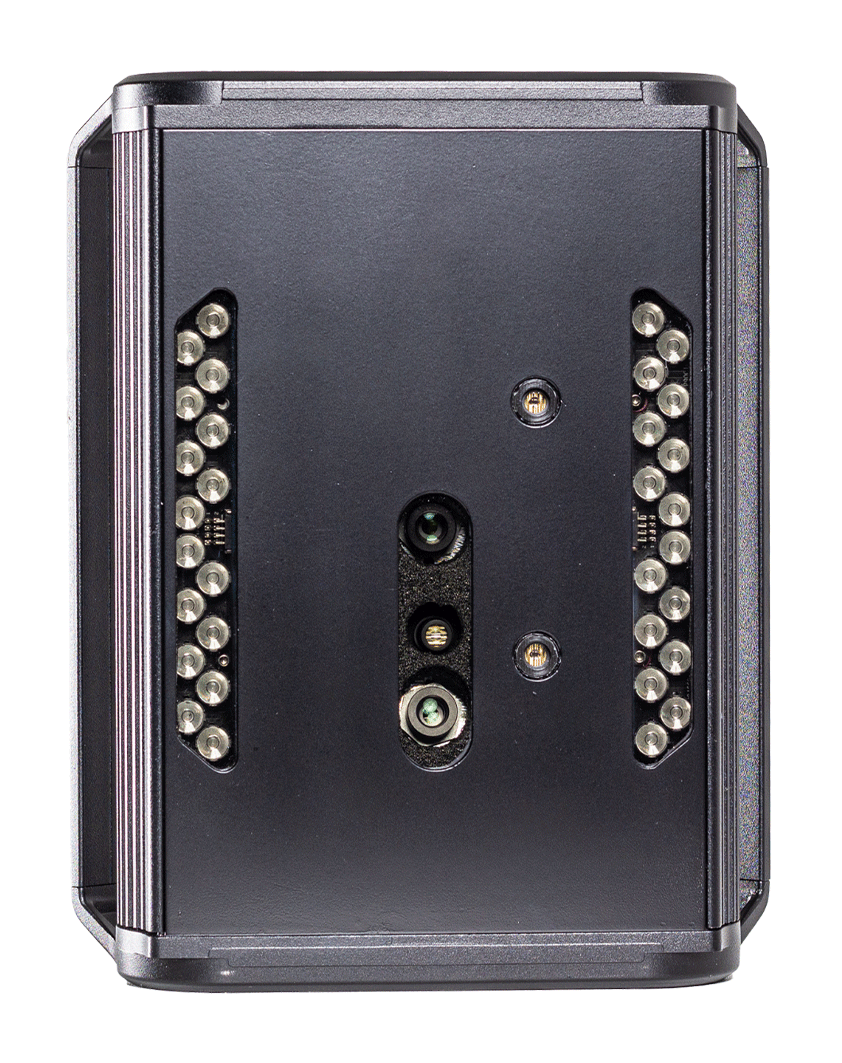
B80, Biaxial extensometer
High-Precision Non-Contact Tracking
To achieve high-precision measurements without ever touching the specimen, Vector utilises advanced pattern-tracking algorithms.
- The process: An operator easily applies standard markings, using a speckle pattern.
- The mechanism: During testing, Vector analyses specific areas of the specimen, continuously tracking how the pattern moves and deforms.
- The result: This real-time, robust analysis allows the system to generate incredibly accurate, non-contact strain measurements, delivered as a low-latency strain output.
Simplified Set Up
Clip-on extensometers depend entirely on direct physical contact with the specimen, introducing immediate risks such as knife-edge slippage and localised stress concentrations that can often lead to premature specimen failure. In addition, these legacy devices must be manually removed before specimen failure to prevent instrument damage, resulting in the loss of critical post-yield measurement data.
When using a traditional clip-on extensometer, data integrity depends on a series of critical assumptions and inherent limitations associated with physical attachment. To maintain confidence in the results, laboratories must continuously verify that:
- The hardware is uncompromised: The sensor hasn’t been dropped, over-extended, or physically altered since its last calibration.
- The mechanics are flawless: The internal flexures have been meticulously maintained and are operating strictly within their design limits.
- The installation is perfect: The technician possesses the specific, subjective “feel” required to attach the device with the correct tension,a variable that changes with every specimen type and inevitably drives operator-induced setup variability.
And yet, even if a lab manages to control all of these variables, clip-ons still operate on the rigid assumption that they are working on a perfect nominal gauge length.
Integrated Cross-Polarised Blue Lighting
Vector features integrated cross-polarised blue lighting, providing reliable and accurate tracking by eliminating surface glare and minimising the effects of changing ambient lighting conditions.
A monochromatic blue light source and matching filter ensure the camera only detects a specific wavelength of light, making the system completely immune to ambient and external laboratory lighting. This guarantees consistent, repeatable results every single time. For the operator, this means total peace of mind: there is absolutely no need to worry about manual alignment, focusing, or tweaking polarisers, the system does it all for you automatically. This also enables reliable, hassle-free operation inside environmental chambers and during high-temperature testing, where thermal radiation would otherwise interfere with data integrity.
By combining cross-polarisation and blue-light illumination, Vector delivers dependable strain measurements across a wide range of materials and testing environments, removing user variability and ensuring maximum operational simplicity.

Unparalleled Accuracy
Vector delivers high-quality, dependable data with real-time accuracy. It ensures stable, repeatable results across a wide range of elongations, maintaining consistent performance from the start to the finish of every test. Crucially, this high-accuracy classification is maintained across the entire field of view for all gauge lengths, ensuring total compliance throughout testing.
Engineered for ultimate versatility, Vector seamlessly tests materials ranging from standard metals to advanced polymers. Regardless of the specific gauge length selected within a system’s range, Vector is guaranteed to meet or exceed international calibration standards throughout the entire duration of the test. No matter the configuration or length, the system consistently maintains:
- ISO 9513 Class 0.5
- ASTM E83 Class B-1
This absolute accuracy applies across all defined operational ranges:
- Vector U200: Gauge lengths from 25 mm to 180 mm
- Vector U70: Gauge lengths from 10 mm to 50 mm
- Vector B80: Axial gauge lengths from 7.5 mm to 70 mm and transverse gauge lengths from 6 mm to 25 mm
Vector also supports demanding standards such as ISO 6892 and ASTM E8 for strain rate-controlled testing and ISO 527 for polymer testing, which requires high accuracy, particularly at very low strain levels near zero, demonstrating its precision in sensitive and stringent testing conditions.
Products
Vector Extensometer Range
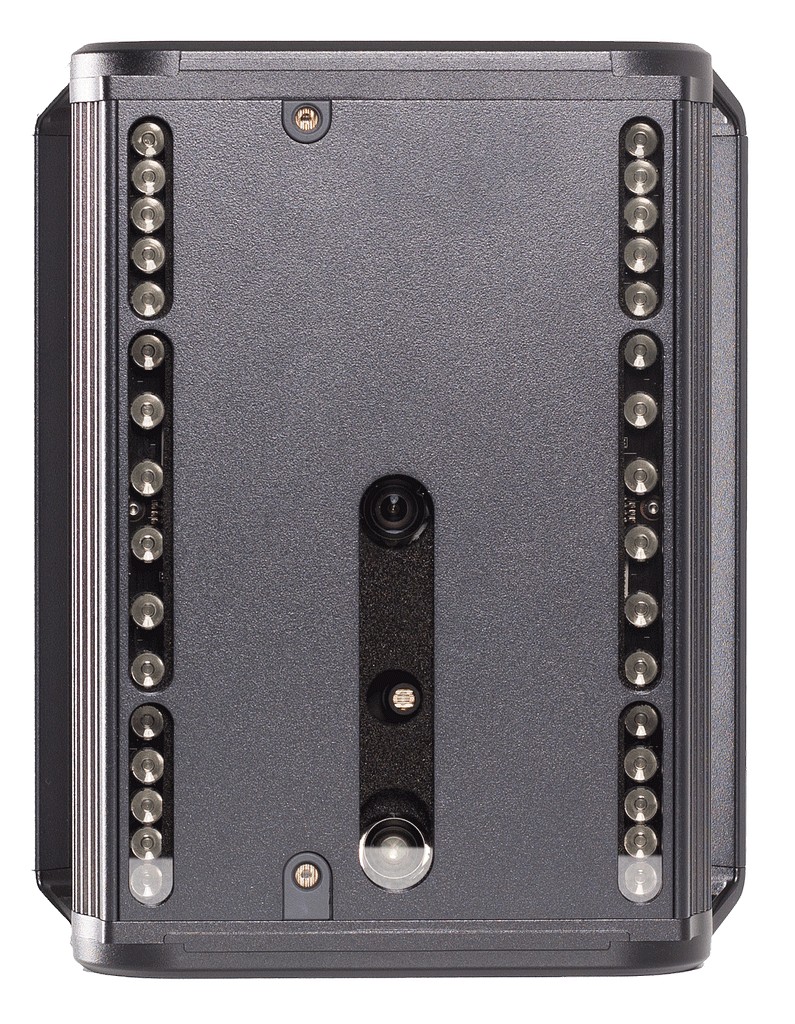
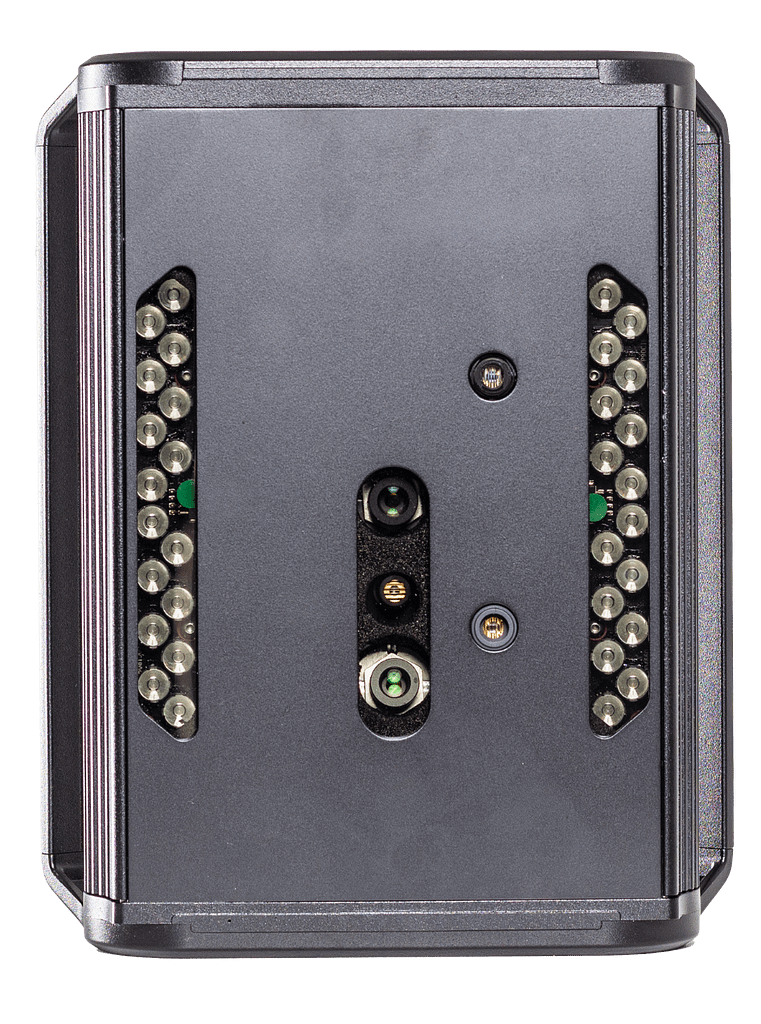
Vector U200
Vector
Uniaxial Extensometer
Gauge length: 25 to 180 mm
Minimum specimen width: 5 mm
Operating distance: 250 to 350 mm
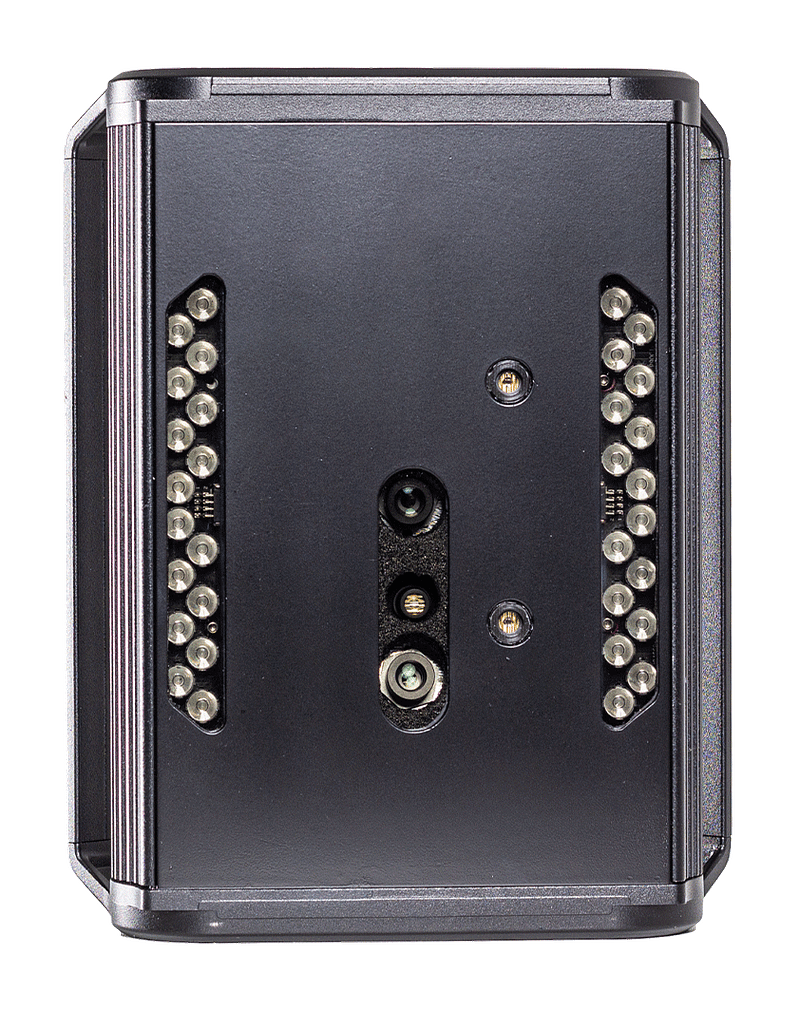
Vector U70
Vector
Uniaxial Extensometer
Gauge length: 10 to 50 mm
Minimum specimen width: 2 mm
Operating distance: 280 to 320 mm
Vector B80
Vector
Biaxial Extensometer
Gauge length: Axial 7.5 to 70 mm Transverse 6 to 25 mm
Minimal specimen width: Axial 1.5 mm flat 2 mm round Transverse 10 mm flat 12.5 mm round
Operating distance: 285 to 315 mm
Frequently asked questions
Have a question?
Below you will find the answers to our most frequently asked questions in relation to our Vector Extensometer. For any additional questions, please fill out the contact form below.
How do I identify Vector dashboard icons?
Answer:
We have designed a comprehensive troubleshooting guide to help you resolve problems quickly and easily. You can find instructions and helpful tips in our Vector manual: Manual
What is the laser safety classification for the Vector lasers?
Answer:
Vector’s lasers are classified as Class 1M under IEC 60825-1 standards.
How does Vector work?
As a factory pre-calibrated system, Vector completely eliminates the need for complex optical setups or manual user calibration out of the box. At the core of Vector are Digital Image Correlation (DIC) algorithms. Traditional camera systems only see movement in two dimensions. Vector uses a two-camera stereoscopic system to reconstruct depth information and calculate true 3D deformation.
Vector uses pattern tracking algorithms to analyse small areas of the specimen surface frame-by-frame, calculating deformation with extremely high precision.
This allows Vector to generate accurate live strain measurements without contacting to the specimen. The specimen surface is coated with a random speckle. During testing, Vector continuously tracks how this pattern moves and deforms.
Because Vector contains an onboard GPU, all computation is handled directly in the device. This allows the system to run DIC algorithms in real time, automatically configure measurement parameters and deliver live strain data directly from the unit where no external processing workstation is required.
What are the advantages of Vector over traditional extensometers?
Answer:
The term non-contact refers to the way Vector measures, requiring no physical contact with the test specimen. Therefore, no clip-ons, cables or sensors are placed on the specimen that requires testing.
The non-contact approach allows operators to use the same extensometer for a wide variety of different specimens and test types. Without the need to touch or alter the specimen, the extensometer does not influence the measurement, which is particularly important with delicate materials. This process is far more efficient, as it only requires simple specimen marking.
Vector builds on years of measurement experience and knowledge in the material testing and metrology fields, culminating in a precision measurement solution resilient to the many challenges of laboratory testing.
Does Vector output video?
ANSWER:
No, Vector does not output or record video archives for data export or post-processing.
Vector is engineered to act as a direct “plug-and-play” replacement for traditional hardware clip-on extensometers, optimised for high-throughput, real-time testing. Because Vector contains an onboard embedded computation, all the heavy Digital Image Correlation (DIC) happen directly inside the device itself, outputting live strain data directly from the unit, completely eliminating the need for an external processing workstation.
What testing is Vector suitable for?
ANSWER:
Vector is suitable for most universal test machines and can be used in applications at ambient temperature and with temperature chambers, Vector outputs measurements in real-time via analogue +/-10V BNC connection.
Vector’s automatic and adaptive control reduces complexity for users and streamlines testing. Vector can be configured to work with different mark types, gauge lengths and outputs. It is well suited to both the common and unusual materials in the metal, composite and polymer industries.
Vector accommodates multiple gauge lengths within one extensometer, including outputting in both strain and extension. Vector is suitable for a range of specimen geometries, environmental conditions and UTMs. Using Vector removes the need to manage delicate contactable extensometers and can test to failure uninterrupted.
How does Vector automate measurements?
ANSWER:
Vector produces extensometry measurements automatically, which significantly reduces the operator handling, test time and likelihood of error. Each Vector has an optically calibrated region of measurement, defined by clear laser guides. Using specific pattern recognition for the marked specimen, Vector can output precision strain measurements repeatably in less than a second without the need for precise positioning or configuration.
What benefit does a biaxial extensometer provide over uniaxial?
ANSWER:
Measuring both transverse and axial strains allows further material information to be calculated from the way these strains behave. Biaxial extensometers are used to help calculate Poisson’s ratio; the Plastic Strain Ratio, r; and the Tensile Strain Hardening Exponent, n.
How should I maintain and clean my Vector?
ANSWER:
To maintain the optimal performance of your Vector extensometer, it’s crucial to keep the front face free from dust, grease and other contaminants. Here’s how to properly care for it:
- Cleaning: Use a clean microfiber cloth to gently wipe the centre window. The window is made from optical-grade cast acrylic, which is prone to scratching, so avoid using abrasive materials.
- Removing debris: For any debris buildup, use low-pressure compressed air (like an air duster) to blow it off. Ensure the nozzle is at least 150mm away from the front face to avoid damage.
- Handling marks or smudges: If you notice any marks or smudges, they should be gently wiped away with a microfiber cloth.
contact
Book a Demo
For a technical demo and more information on how Vector can meet your measurement needs, please fill out the form below.

 powered by Borlabs Cookie